

'IT WAS REALLY RAW'
Glenn Orgias in conversation with Iain Ryan

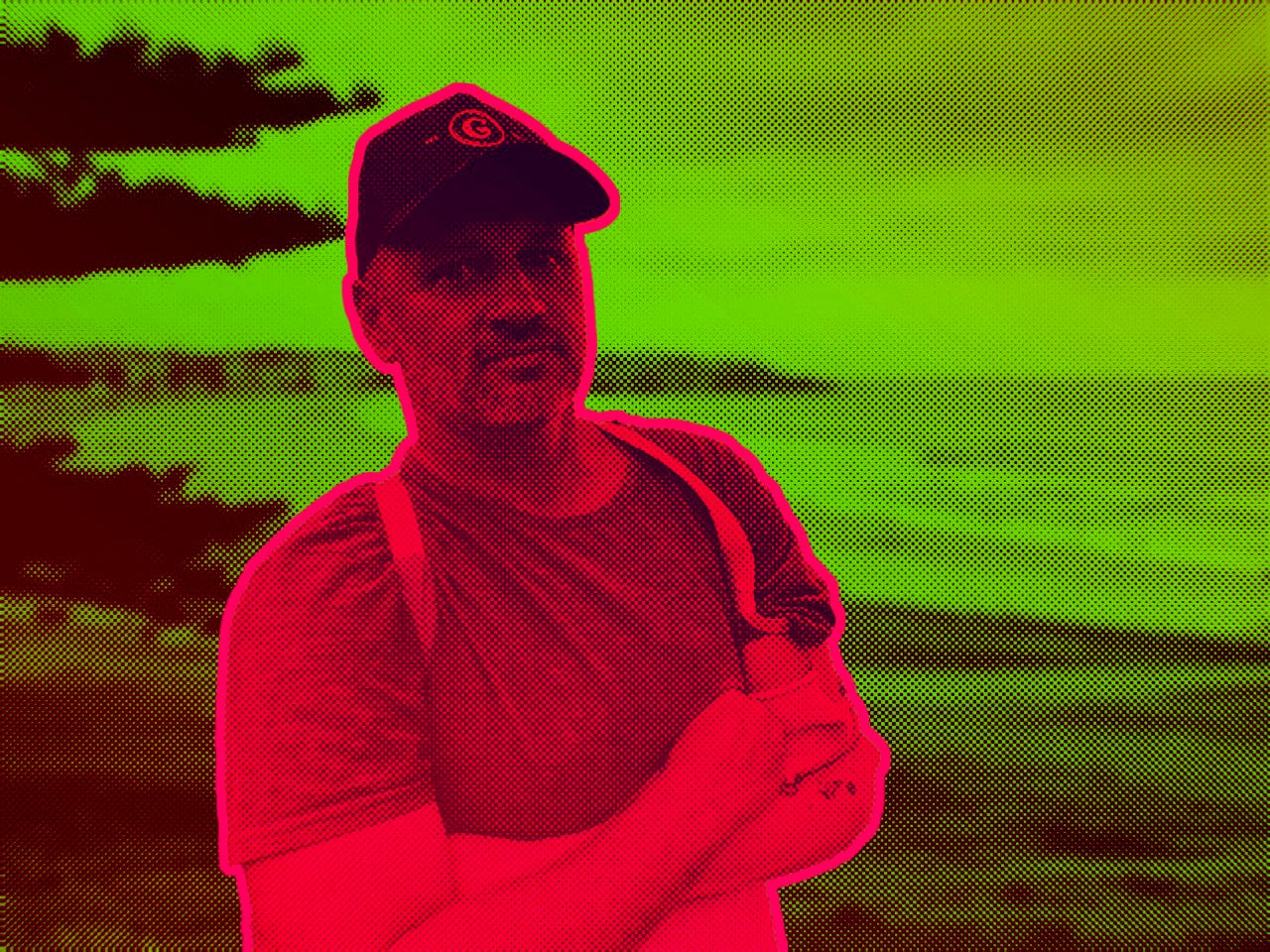
On Wednesday the 5th of August, Sydney author Craig Orgias and I sat down in Readings Carlton to discuss his path into writing, the mean streets of Newcastle, and his debut novel Teethkicker (out now via HarperCollins).
Teethkicker is exactly my sort of crime novel. It’s the story of Vincent — a recovering heroin addict — who is forced into debt-collecting work to pay off his own debts. It’s a classic noir tale of a down-and-out guy, dealing with the trauma of a difficult past, and trying to survive in a brutal environment. That environment here is the city of Newcastle in the 1990s, which is where we started our conversation.
IAIN RYAN
Let’s talk about Newcastle. From snooping around online, I gather you were living in the city at about the age Vincent is, in the 90s?
GLENN ORGIAS
Yeah. The novel’s set in 1994, the first year of the internet. It doesn’t say that, but that’s how it is in my mind. I moved to Newcastle around then, and it was the first time I’d been to what I thought of as a huge city. For me that was New York, because I was from a little rural place — Tumbi Umbi, land of the tall trees, a big acreage area. Newcastle was amazing, because it was a proper city. The steelworks had just shut down when I moved there, so the place was mostly boarded up. There was some crime, a bit of violence, but that created a culture, if that makes sense. There was a lot of music. Everyone was in a band. Heaps of nightlife. Heaps of students. Lots of unemployed people and lots of steelworkers. It was really raw. I loved it.
IAIN RYAN
My first traditionally published novel also went back to the town I was living in in the nineties — 1994, in fact. Did you go to university in Newcastle, or did you move to just get out of the small town?
GLENN ORGIAS
I went to uni there. I left home just before I turned eighteen. I finished school quite early and moved to Newcastle. Lived on campus for a year, then with friends for the next four or five. Studying engineering.
IAIN RYAN
Teeth Kicker is beautifully written. How did you get started? You studied engineering, so you didn’t develop this at uni.
GLENN ORGIAS
I’d always been a big reader, like most writers. But I never really wanted to write. I wanted to be a footballer — that’s what I really wanted. That was a bit of a failure, unfortunately, and when I finished playing I got quite down. One of the recommendations at the time was to start writing, just to get what was in my head out onto the page. So I wrote about myself and how I was feeling, and that was good. I caught the bug. I wanted to write novels but I didn’t know how, so I started with short stories. I thought that would be my path.

IAIN RYAN
Back in the nineties and 2000s that was the common path — get a few short stories into the big magazines, get an agent, and they help you sell the book. It doesn’t really work like that anymore.
GLENN ORGIAS
No, I don’t think it would work now. I’ve had thirty short stories published, and each one was read by seven or eight people, one of whom was always my mum. That was great, but it doesn’t get you an agent.
IAIN RYAN
I didn’t realise there were so many. That’s really cutting your teeth. Getting your reps in.
GLENN ORGIAS
Each of those thirty I probably wrote twenty times. A lot of it was flash fiction, which has become a bit of an in-thing, particularly in the States. It’s heaps of fun — a thousand words, three pages — but they’ve got to be really tight, really minimalist, and still be good stories. You’ll write it fifteen, twenty, thirty times before you get it right.
IAIN RYAN
That’ll teach you concision, which is useful for a crime novelist. It keeps the plot moving.
GLENN ORGIAS
That’s exactly it. The big novels I really loved — I love something like Infinite Jest, the maximalist novel — I don’t think that kind of writing works too well for readers these days. I don’t think you can swing it.
IAIN RYAN
Did you start Teeth Kicker as a crime novel, or did it evolve into one? Or is it not a crime novel, and this is just how we’re selling it?
GLENN ORGIAS
I didn’t envisage it as a crime novel, and I’m not a hundred per cent sure it is one. A very intelligent writer I know wrote on Substack recently about what you need to do in a crime novel: you need to kill someone in the first chapter, preferably on the first page.
I wrote back saying I hadn’t done that, because I didn’t know. I don’t have a good feel for what’s actually in a crime novel. For me this was about characters and people — two brothers. I always saw it as a novel about two brothers. But it didn’t have any tension, and you can’t just have a novel about two brothers, so I had to introduce tension somehow. That’s how the crime came in.
IAIN RYAN
Now you’ve got me stumped, because immediately I’m thinking, what’s the engine? I suppose it’s his debt. Vincent is in peril from the start, isn’t he?
GLENN ORGIAS
Yeah. I feel like I’m giving away all my secrets, but there’s a big American agent, and I can’t remember his name, who wrote a book about the breakout novel, and he has this theory of bridging tension. That’s what I tried to use. It’s all bridging tension until he does the stupid thing he does. The first part of the novel is about his love for his dog and wanting to get the dog back — that’s the first bit. Then one of his friends is in trouble and he wants to save her. It just skips from stone to stone, little bits of bridging tension, until he does the stupid thing.
IAIN RYAN
Okay. I’m sold. We can proceed. Vincent, the protagonist, is such a well-drawn character that it was hard to think of a good question about him — I felt like I knew everything I needed to know by the end. But I’ll say this: he’s very much a young man —a bit like how I was and like a lot of people are— who mistakes what he wants for what he needs. He’s in debt. He’s in recovery from a nasty addiction. What do you think Vincent is chasing?
GLENN ORGIAS
I was talking to my wife about this. I asked what she thought, and she said straight away what my answer was too: forgiveness. That’s what he’s seeking. The premise, or the inspiration behind it, is an event in the backstory — a car accident with the two brothers. It’s not a spoiler. In that accident the younger brother, Ray, loses his arm. I had that accident with my brother. He didn’t lose his arm, he was okay, but I remember the car flipping over and looking across at him. That was the moment in my life when I realised I wasn’t invincible. I was eighteen, and until then I’d thought I was. Life’s pretty fragile, and I really loved him. That’s what sparked the whole thing.
IAIN RYAN
That’s the business we’re in.
GLENN ORGIAS
It is. It’s all about trying to connect, and that comes back to the crime question. For me it’s got to have an emotional connection in it. I wanted to look at what it was like to be a young man. Vincent is tough, he’s a big guy, he’s got all these macho elements to him, but he’s not really macho at all. He’s quite vulnerable. So is Ray, actually. It’s a big cliché to say now, but I was exploring what it’s like to be a young man and to be vulnerable, and whether that’s a strength or a weakness.
IAIN RYAN
I think it’s a rich noir novel in a lot of ways, because noir is so interested in trauma. It comes to us from the post-war period, all these traumatised servicemen coming home to a different world they’ve inherited. So the emotional tenor of the book and the crime go together seamlessly. It doesn’t surprise me at all that you didn’t envisage it that way, because writing a noir novel in Australia is a terrible commercial decision. The book also operates on other levels too. It could be characterised as grunge lit from the 90s. It’s reminiscent of books you probably read back then — Andrew McGahan’s Praise and that whole suite of stuff that was in uni share houses everywhere. Did you read any of that stuff?
GLENN ORGIAS
I read some of it, but it didn’t really stick with me, to be honest. The grunge scene did, though. That’s really stuck with me — the feeling of those times. That’s what those books touch on, and I think that’s what this touches on a bit as well. It’s hard to go back to the nineties, particularly somewhere like Newcastle, without that. There’s still pub rock, and the big bands at the time are Nirvana and Pearl Jam — that scene coming over to us. It’s hard not to connect with it. And it was a bit of a darker time. Funnily enough, the world’s terrible now and it was probably better then, but it felt like a rebellious kind of time. And the hard drug of choice was heroin, so it fits that moment.
IAIN RYAN
It wasn’t inconceivable, in my experience, that someone like Vincent would take heroin in the 90s. It certainly wasn’t going to be meth.
GLENN ORGIAS
Heroin was really big then, and I had a lot of exposure to it — not taking it, I never did that. My father was a general practitioner. We grew up in a rural place, as I said, but he worked in Long Jetty on the Central Coast, which was quite a low socioeconomic area at the time, and he ran a methadone clinic there for ten years or so. After school I’d sometimes go and sit at his desk and watch the people coming in. It was sad, and it was really interesting. A lot of them were getting their lives back on track. And it wasn’t just down-and-out people — there were other doctors, firemen, bus drivers, all different kinds of people. That was really my exposure to it. I knew those people weren’t bad. They were good people. But that drug will trip you up very quickly.
IAIN RYAN
I love Vincent and his brother Ray, but like all good crime novels, so much of the juice is in the eccentric side characters. I want to talk about two of them. The first is the terrifying guy Vincent does the debt collecting with — Machine. He has a strange relationship with Vincent by the end of the book, and he’s quite eccentric for a tough guy. Can you tell us about him?
GLENN ORGIAS
Machine is basically a psychopathic germaphobe. He’s fascinated by his own germophobia in a lot of ways — it horrifies him and fascinates him at the same time. And he has a set of rules he likes to live by, which stay a bit secret in the book, but he’s very principled about them: about the work you should do and what you’re obliged to do. I don’t know if it’s giving too much away, but I always saw him as a version of Vincent — the darker side, with Vincent as the lighter side. One of my beta readers said something similar: that they liked how the relationship develops, that it’s slightly strange, it’s got some nuance to it, and it’s real. I loved the bromance of it. There is a bit of bromance there.
IAIN RYAN
And he wears these rubber gloves. You just know it’s about to get real when Machine puts the gloves on. It’s dread-inducing. Wonderful. I could read a whole series just about Machine. The other character I really liked was Henrietta, the woman Vincent runs into through the collecting work and then tries to save from her addiction and the debt she’s found herself in — much the same position he’s in. For me she’s a classic noir character, because you just know it’s doomed. It’s not going to work. And yet you do a great job of making me want it to work.
GLENN ORGIAS
It’s no spoiler to say that two drug addicts together is a recipe for absolute disaster. She’s my favourite character in the book. She’s a trans character, so she’s really struggling with her identity, and working through that is a big part of her path. I think there is real love there, but I’m always interested in the balance between romantic love and platonic love. I’m not sure there’s a whole heap of romantic love, but there’s a real platonic love. I think they were friends as much as they were in love with each other. She’s a nice balance — she brings a bit of light, a bit of happiness, and a bit of craziness.
IAIN RYAN
Without spoiling anything, I found the way her story concludes extremely left-field. Sad, but fascinating. She ends up in a very difficult place and it isn’t tidily resolved, which I really thought was great.
GLENN ORGIAS
Thanks. That part was hell. Absolute hell. There are a few writers here, so everyone will know this — you get stuck on that one point. You sit there, you go for a walk, you try to figure it out, you’ve got your spreadsheet out. How can I do this? It was really difficult to get there without turning it into something that didn’t suit her motivations, or her beliefs, or what she’d actually do as a character. It was tough. It was really tough.
IAIN RYAN
I could tell you’d found your way there through process. There’s no way you’d map that. You don’t outline something like this.
GLENN ORGIAS
No. With that bit, to be honest, I just sat there and thought, I’m going to have to write through it. Keep writing, pages and pages, until something clicks. Which is an awful feeling.
IAIN RYAN
The crime market in Australia is fairly conservative. I love a good outback noir like everyone else, but something gritty and dark like this doesn’t always get up with a publisher. How did you get this published? Is there a story, or did they just like it?
GLENN ORGIAS
It was hard, and then at the end it was really, really easy. It was hard for a long time. The hardest part was finding an agent — going through that querying process. I don’t know if you’ve done that before. It was really challenging. Having been in the short story market for a long time, sending out a lot of submissions, I was quite used to getting rejected, so it was water off a duck’s back, but there was a lot of it. A lot of people saying, this isn’t quite right. I was trying to pitch it as Trent Dalton-ish, because you’re always going to have to have a comparison title. I don’t think it’s anything like that, but you’ve got to have the comp title. And people were reading the pitch and the synopsis rather than the book, and I think the book is quite different to both of those things. So that was hard. But once I got my agent, she knew exactly who to send it to. She knew that if she sent it to Roberta, Roberta would like it. And the day Roberta got it she was sending text messages to my agent, Jeanne, who was forwarding them to me: geez, I like this, this is really good, who’s this Machine guy? So that part went really quickly.
You’re right, though. Even Roberta has said it’s not your typical crime thriller — it’s going to be a niche. It’s not going to be broad. It’s going to need to find its audience, and that might not be the standard one. So, not necessarily super smart of me to end up in that situation, but I wrote a thing I was passionate about. And I saw something interesting the other day. I’m not comparing myself to it at all, but just the fact that it’s getting up and it’s quite popular: one of the Booker longlisted novels — All Them Dogs — is an Irish gangster story, dark and gritty, working for an enforcer. Tonally it’s quite similar. I was really happy to see that, and happy that it was picked for the longlist. It’s doing really well, it’s selling, and I’d like to see some diversity there. I love rural noir — I think The Dry is a great book and I really enjoyed it — but it’s good to see it branching out a little.
IAIN RYAN
Well, hopefully this sells like a Trent Dalton book, but one with a sociopathic killer in rubber gloves. I’m from Brisbane, so I’ve got to pay my respects to Brisbane’s favourite son, but I gotta say, every time I visit book stores up there to sign stock, the clerks tells me Trent Dalton was here six months ago, he’s so nice, and it leaves me thinking, What the hell? Am I not nice? Not as nice as Trent Dalton, it seems. Glenn, you have a professional life, a family, and surfing. Where does writing fit into all this? Talk me through a day.
GLENN ORGIAS
My family comes first, then surfing definitely comes second, and then I write after that. I’m not very good at being consistent about it, and I work as well. But I find time when I get motivated in the mornings, and sometimes in breaks at work, at lunchtimes, in the afternoons. And when I hit my stride — when I understand how the next thing works, how the book is going to go — then I can get a lot out very quickly. It’s that searching phase that takes a long time. I need to do a lot of walks and a lot of scribbling in my notebook. I write for ages and ages in a notebook before anything goes onto the computer, because I like the feel of writing in a notebook. And I write heaps of little flash pieces and try to see how they all come together. Then at the end of all that I have a really awesome spreadsheet that I work on for ages — I love spreadsheeting. It’s all a combination of these things, and then at a certain point I’m ready to write it, and I’ll write quickly.
IAIN RYAN
Okay, that’s enough from me. Who’d like to ask a question?
AUDIENCE
It’s a nostalgic book, in terms of Newcastle. I’m wondering whether the nostalgia is about a loss of innocence.
GLENN ORGIAS
I think so. I think part of it is me. When I left Newcastle I was 27 or 28, and I really left that life behind. I left not liking the person I was, and went away to work overseas, then came back and was a bit lost at that stage. I didn’t like anything about my previous life. It wasn’t until I was married, and quite a way through marriage, looking back on my life, that I thought, actually, I really did like that person. He was quite a good person — a bit needy, and not really that useful, but looking back, I think I was a good person then. And I really enjoyed my time in Newcastle: the friends I made there, and the connections. That was something that was really important to me. And that’s your twenties, when you’re just having a cracking time. So yes — nostalgic, for sure.
AUDIENCE
Glenn, thank you. I’d just like to correct you: it is absolutely not true that only eight people read your flash fiction. Many, many people love it, and I really recommend it to you all. I’m just asking for a friend — how do you shift from writing micro and flash to writing a novel?
GLENN ORGIAS
That was pretty hard, actually. Everyone has their own path, but I do think it’s good to find something to hang your hat on. Two things really helped me. The first was that I read a lot of screenplays, and I wrote a lot of screenplays. I’m really interested in that form. I love it. I love reading screenplays — they’re my favourite thing to read, rather than novels, to be honest. Breaking Bad, Pulp Fiction, anything by Tarantino. And a screenplay has a real structure. You can’t get something up unless that three-act structure is there. So I spent a lot of time learning about three-act structure, and this book has a pretty clear one, in my mind at least — turning points at the right time, a midpoint, a crisis, all that sort of stuff. You don’t want those mechanics to show up in the book itself, and that’s the art of it, not letting that happen. But I needed that structure in my mind or I wouldn’t have been able to do it. Because flash isn’t doing that. Flash is putting your gut on the page. It might be a story about a moment, or about a feeling, or a story that doesn’t necessarily resolve, or only resolves partially. A novel needs to give a resolution for all the threads.
AUDIENCE
So you need to be much more planned out? You’re a plotter?
GLENN ORGIAS
I am. Many novelists will write and see what happens, and pants it all the way through, or partly. I’m more in the middle. I like to pants a little, and then I’ll stop halfway through and think, I’ve got to plan the whole rest of it, and I’ve also got to go back and re-plan the stuff I already wrote, and write to a structure after that. Otherwise it’d just be incoherent.
AUDIENCE1
I’m not just saying this to say it, but I read this over the last week, and it reminds me of my favourite novel of all time, Galveston by Nic Pizzolatto — which I quizzed you about earlier, and you haven’t read. In so many ways it’s evocative of that. There are sentences in this that are so beautiful because of their restraint. I’m improvising this question, but did that come from the short stories? Saying only what’s essential, and that being what makes it beautiful? I noticed it in almost every chapter.
GLENN ORGIAS
Language was really important to me for a long time. When I was first writing, I was trying to imitate all my favourite authors, who all wrote really beautiful, page-long sentences. And I’ve written heaps of flash pieces that are basically three-page sentences. I love language, and I love reading that kind of stuff — I love really deeply literary novels, they’re probably my favourite ones. But I couldn’t pull it off. It didn’t work for me to write that way. I can’t write plotless novels; I need something to hold on to. So the way I found my voice in the end, rather than being really imitative of someone else, was to pare it right back and try to find the beauty in something quite minimal. I thought about that a lot, and that’s what I wanted to do. But the language was really important to me.
IAIN RYAN
One last question.
AUDIENCE
I’d love to know whether you’re working on something new yet, or if you’ve got an idea for another book.
GLENN ORGIAS
I’ve got two ideas. I’ve got four or five screenplays I’ve written that I think I could turn into novels, but there are two other ideas I’m more focused on at the moment. I’ve got to decide which one and pick a lane. One of them’s really different, and one of them’s a crime novel.
AUDIENCE
Is there a body on the first page?
GLENN ORGIAS
Not yet. I need to. You don’t have to have the body right there, do you?
IAIN RYAN
No. You just need to know they’re dead.
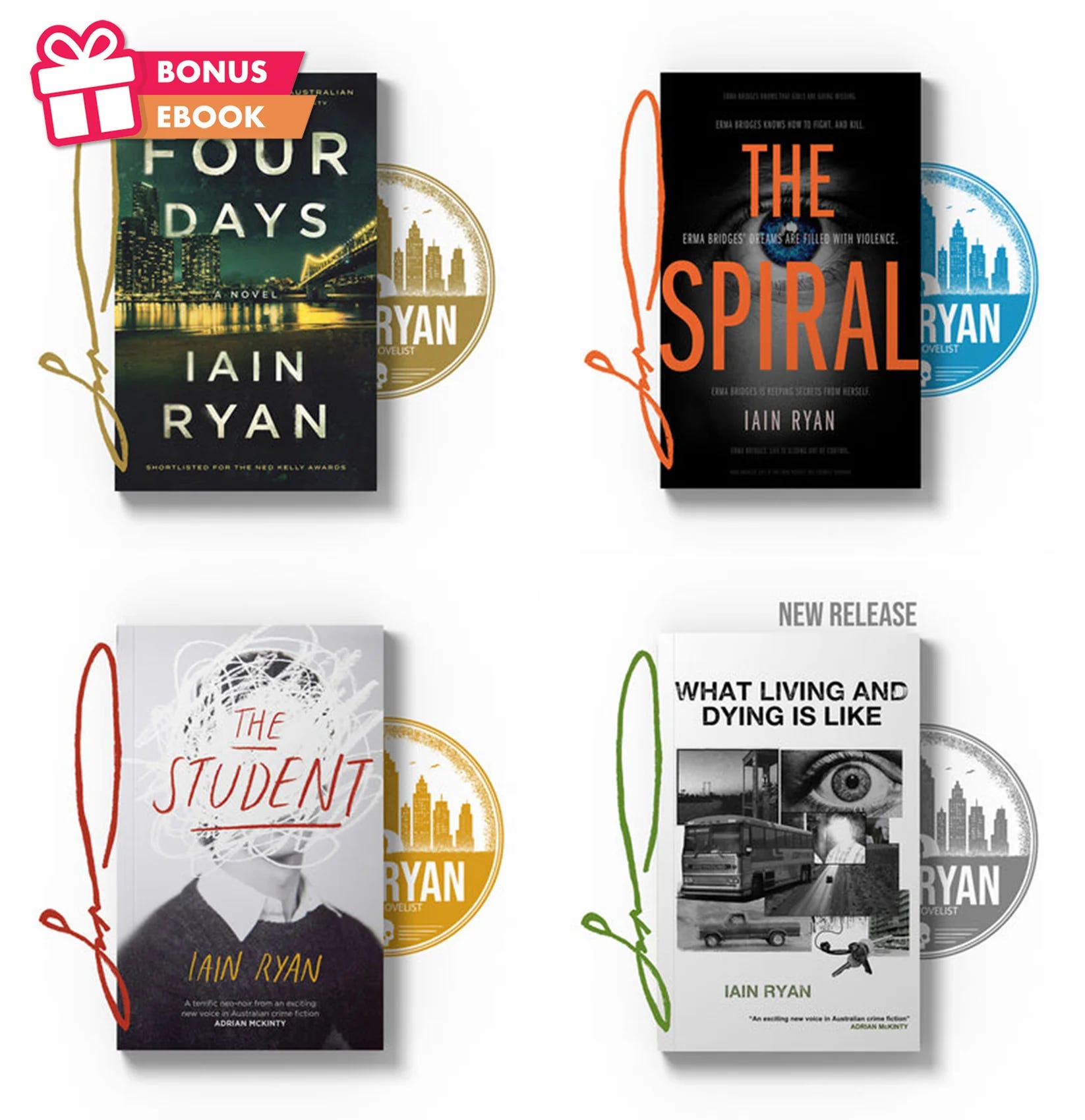
If you’re a fellow crime author, I’m available to host live events in Melbourne. Please reach out direct to hook things up. My rates are very reasonable: a free copy of your book and a beer afterwards, if available. I can promote and document the event on this list. There’s over 3,000 people subscribed at the moment.
This question was asked by Matt Rogers who has sold over 1,000,000 books on Amazon, so I think you should listen to him.
Teethkicker is now on my list to savour. Thanks for the deepdive convo.